Microplastics are hidden in various places throughout the home, from the kitchen to the laundry room to the bathroom. Here's some of the most prominant types of products and ingredients to watch out for.

Personal care products (PCPs) and cosmetics can be a surprising source of plastic, with studies finding top American skincare containing 60 to 800 micrometers of microplastics (Jessieleena et al.). In New Zealand, one study found that 6% of a PCP's weight was purely plastic (Kukkola et al.). 1 mL of facial scrub from the UK could contain up to 19,000 particles of microplastics (Kukkola et al.). This issue goes beyond wasting money on plastic, as nanoparticles can remain on skin cells dispite multiple rinses, leading to inhibited growth and reduced viability (Kukkola et al.). Not to mention, these particles will eventually be washed-off, and make their way into our water system.
A huge win for the fight against microplastics in the United States came with The Microbead-Free Waters Act of 2015, that came into effect 2017-2018 (Center for Food Safety and Applied Nutrition). This bill prohibits the manufactoring, packaging, and distribution of rinse-off cosmetics containing microbeads (small plastic spheres 5 milimeters or less, that are inteded to exfoliate or cleanse the body). Products such as facial and body scrubs, toothpaste, and others are now safe from microbeads, however, they can still contain other types of microplastics.
Check products such as:
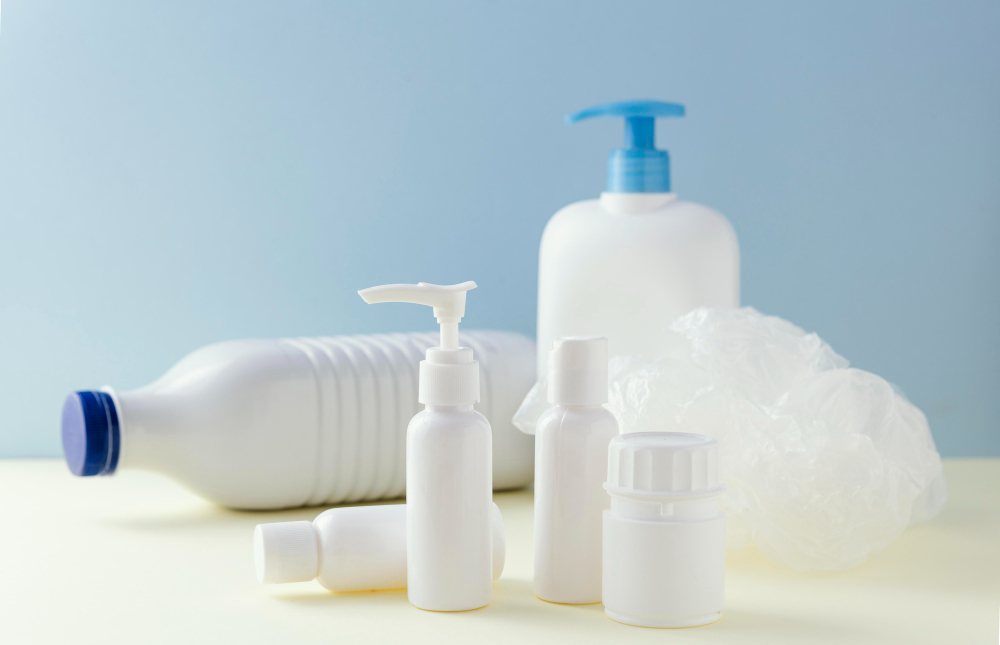
Some (non-extensive) ingredients to avoid as listed by BeatTheMicrobead:
There are a wide variety of ingredients that are ultimately nothing more than plastic, hidden in an attempt to keep consumers from recognizing them. The Plastic Soup Foundation is a Dutch-based non-profit organization that works to stop plastic pollution and raise awareness about microplastics, most recently through their initiative PlasticFreeFuture. This is an app that allows users to scan their product's ingredient list to detect microplastics: https://www.plasticsoupfoundation.org/en/scan-your-products-for-plastic.
There are other initiatives fighting microplastics as well, such as 5 Gyres's Microplastic-Free US (https://www.5gyres.org/microplasticfreeus) and The Ocean Cleanup (https://theoceancleanup.com/). While we are not affliated with any of these organizations nor their products, they each provide a variety of information about the impacts of microplastics and how to decrease their presence.